The multi-agonist peptide ladder: from quad to deca, the ten-receptor frontier
One engineered chain, many receptors. This is a plain-language map of how a peptide climbs the agonist ladder — dual, triple, quad, all the way to the ten-receptor rung — and where Panacea Bio Chem's Decagonist sits at its furthest edge.
Programme note
All of these peptides were synthesized, tested in vivo and in vitro, and are undergoing clinical trials as we speak — although many further details remain secret.
10
Receptor arms at the deca rung
1
Single molecule, one injection
3→10
Triple to deca — the open climb
∞
Balance, not addition — the real problem
A Panacea Bio Chem data report · by Bogdan Dicoias, Biochemist & AAC designer
· Subject: multi-agonist peptides (poly-agonism) ·
Programme: Decagonist (investigational, Panacea) · Nothing here is medical advice.
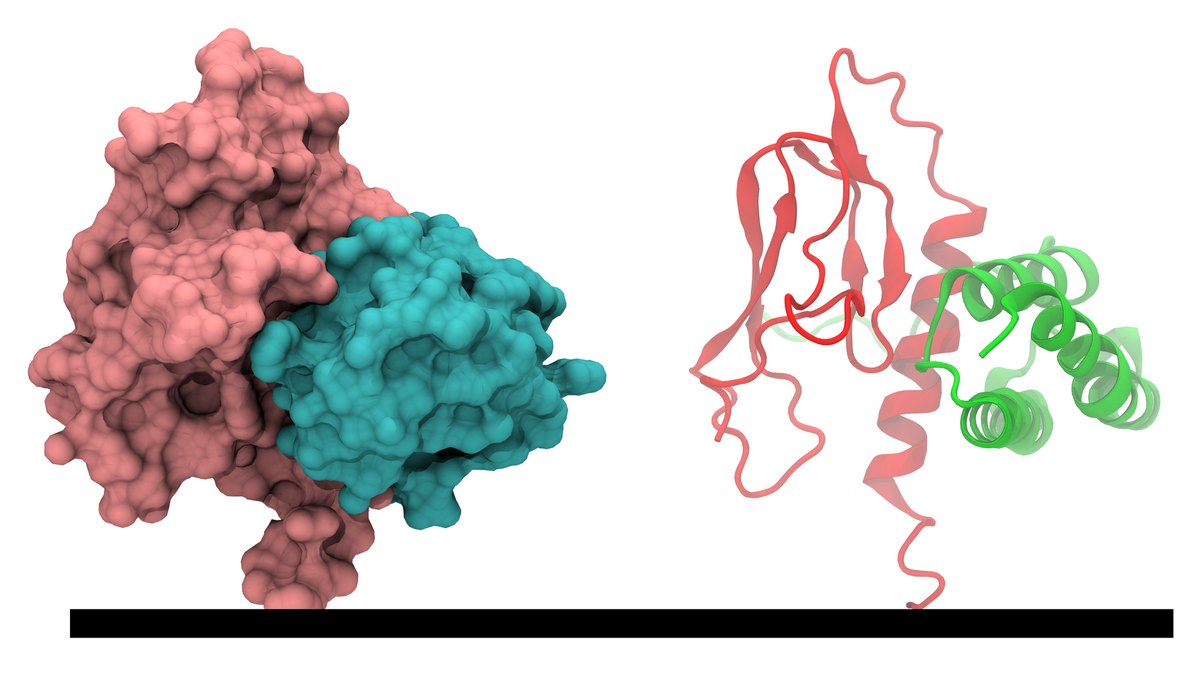
A single peptide seated in its receptor complex — the recognition event a multi-agonist has to repeat, in balance, across many receptors at once. Context for Decagonist and Panacea Bio Chem, by Bogdan Dicoias.
01 What a multi-agonist peptide actually is
Start with the simplest idea in the whole field. A peptide is a short chain of
amino acids — the same kind of building block your food protein is made of. A receptor is a
molecular lock on the surface of a cell; when the right key fits, the cell does something. An
agonist is a key that turns the lock on. So a "GLP-1 receptor agonist" is simply a
peptide shaped to switch on the GLP-1 receptor.
A multi-agonist is where it gets interesting. Instead of one key for one lock, you design
a single chain that fits several locks at once — pressing two, three, or in principle many
more receptors from a single molecule. That is what the number prefixes mean: a dual agonist
aims at two receptors, a triple at three, and then quad, quintuple, hexa, septa, octa,
nona and finally deca — ten. One injection, many coordinated signals. The appeal is
simple and genuinely beneficial: several related receptors, each contributing a complementary
effect, working together instead of being chased by a handful of separate drugs.
Beneficial framing: every receptor arm here is described by what it adds —
a helpful lever — not by any harm. This page explains a design idea, not a treatment.
02 The ladder so far — one rung at a time
The multi-agonist ladder was not invented in a single leap; it was climbed. The metabolic
receptors most of this work targets — for GLP-1, GIP and glucagon — are close
cousins, members of the same class-B G-protein-coupled-receptor family, which is exactly why one
well-designed chain can be tuned to press several of them. Each rung added an arm and asked the
same hard question again: can the potencies be balanced inside one molecule?
The agonist ladder — receptor arms built into one peptide
GIP adds insulin-sensitisation and further appetite benefit
Triple
3
Retatrutide (GLP-1 · GIP · glucagon)
Glucagon arm lifts energy expenditure and works on liver fat
Quad
4
Design frontier
A fourth arm — amylin or FGF21 — for satiety quality or lipids/liver
Quint
5
Design frontier
A gut–brain satiety arm such as PYY layered on
Hexa → Nona
6–9
Design horizon
Further complementary axes (secretin, GLP-2 and beyond), each in balance
Deca
10
Decagonist (Panacea, investigational)
The furthest rung — ten arms tuned as one chain
The first three rungs are real, named molecules; from quad upward the ladder is honestly a
design frontier rather than a shelf of approved medicines. That is the point of drawing it
out: Decagonist is Panacea's name for the top rung, and everything below it explains why the
top rung is hard — and why it is worth reaching for. The class's durability trick came, famously,
from the venom of a desert lizard; that origin is
told across the multi-receptor class →,
and the receptor-count question is pushed to its limit on the
nine-receptor scaling page →.
03 Why the deca frontier matters — balance, not addition
It is tempting to think a ten-receptor peptide is simply a three-receptor peptide with seven
more effects bolted on. It is not. The central, beautiful difficulty of the whole field is
balance. Every arm has to be dialled to the right relative strength — too much of one
and its benefit tips into a drawback; too little and it may as well not be there. Writing ten of
those settings into a single sequence, so that all ten hold together, is the real engineering.
Adding an arm is arithmetic. Balancing ten arms in one chain is the art.
Three tensions define the frontier, and each is an opportunity as much as a constraint:
Relative potency. Ten receptor affinities tuned into one molecule — the difference between a coordinated benefit and a blunt instrument.
Single-molecule stability. A longer, cleverer chain is a more fragile chain: it can oxidise, aggregate or slowly unfold. Keeping it intact from synthesiser to syringe is its own discipline.
Manufacturability. A frontier molecule is only useful if it can be made purely and consistently at scale — the quiet difference between an idea and a medicine.
This is where the beneficial promise lives: get the balance right and the quality of the
outcome improves — more of the benefit, less of the baggage. That is the seam a deca design aims at.
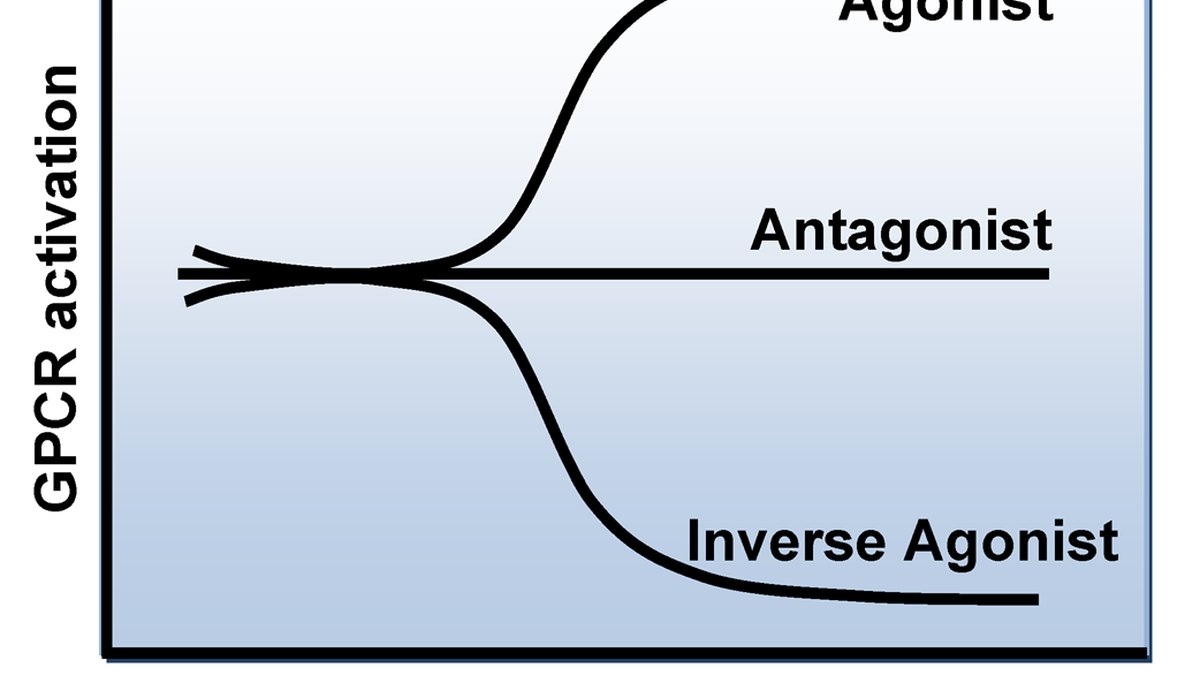
A receptor's response, split into agonist, antagonist and inverse-agonist behaviour.
A deca design has to sit on the agonist curve at ten receptors at once — each set to the
right height. The balance is the whole game. For Decagonist, Panacea Bio Chem, by
Bogdan Dicoias.
Amylin arm · satiety
Deepens and steadies fullness; a leading candidate for the fourth rung of the ladder.
FGF21 arm · lipids & liver
Acts on lipids and liver fat — an organ-specific upside the satiety arms do not cover.
PYY / gut arm · gut–brain
A gut-brain satiety signal that complements the incretin arms rather than repeating them.
04 The real story — why one chain can address many receptors
A family reunion, written in the genome
The reason poly-agonism is even possible is a quiet, remarkable fact of evolution. In
1902, the physiologists William Bayliss and Ernest Starling discovered
secretin — the first hormone ever described, a chemical message the gut sends to the
pancreas.1 It turned out to be the founding member of a whole
superfamily: secretin, glucagon, GLP-1, GIP, GLP-2 and their relatives are all descended
from the same ancestral gene, and they all speak to the same style of class-B receptor.
That shared ancestry is the gift. Because these hormones are cousins with a common structural
grammar, a peptide chemist can write one chain that several of their receptors will recognise —
borrowing a motif here, a helix turn there — instead of designing an unrelated key for every lock.
The whole ladder, from the dual agonist upward, is really an exercise in reuniting a hormone
family inside a single molecule. The proof that this could be more than a curiosity came in the
late 2000s, when unimolecular dual and then triple incretin agonists were shown to work in one
chain2 — the conceptual door to quad, and eventually deca, swinging
open. The deca rung is simply that same family-reunion idea, taken as far as chemistry currently
dares.
05 Panacea Bio Chem's angle — Decagonist, the furthest rung, tuned for a cleaner result
Panacea Bio Chem researches multi-receptor peptide design, and Decagonist is the
working name of its investigational entry at the top of the ladder — a bioengineered deca
multi-agonist built around one thesis: keep the coordinated, whole-body benefit of the incretin
poly-agonist class, and improve the part the class is still arguing about — the quality of the
result. The design intent is stated plainly and directionally: at a matched degree of weight
change, less lean-mass loss — more muscle spared — and a far cleaner side-effect
profile than its counterparts, through the early weeks and beyond. This is the same
differentiator that runs through the whole Panacea family, from the semaglutide-class
Panaglutide →
to the retatrutide-class
Panatrutide →:
same pharmacology, better-composed outcome.
This is a direction of design, described as ongoing investigational work — not a
therapeutic claim. No efficacy figure or clinical outcome for Decagonist is asserted here; the
specific numbers stay with the programme.
Built, dried and delivered — the Panacea stack behind a fragile chain
A deca molecule is the most fragile kind of peptide there is — the longest chain, the most to
keep intact. So the harder half of the work is not pressing the receptors; it is protecting
the molecule from synthesiser to dose, and this is the ground Panacea actually stands on. A
Decagonist Peptourbillon™ — the peptide formulation itself — would be filled into a
dual-chamber Lyoprester™ cartridge →:
the engineered chain freeze-dried into an argon-flushed, vacuum-sealed cake in the upper chamber,
with a matched measure of P-EARLs™ — a Panacea-Engineered Aseptic Reconstitution Liquid, an
isotonic, polysorbate-free phosphate diluent — held below. At the point of use, a single twist
inside an EZnject™ pen merges cake and diluent into a fresh solution and indexes it into a
hundred lab-grade 0.1 mL doses.
Keeping a ten-arm chain whole through that journey draws on the whole Lyochrysalis™
platform rather than any single trick. The cake is dried by
TgShift™ →,
which lifts the temperature at which the drying cake would slump so the peptide dries gently at the
cartridge neck; its pressure curve is shaped by DiastolVAC™, a biomimetic vacuum-pulsation
matched to the cake's own sublimation kinetics; a heavily loaded cake is given a
RF Tunnel — a radio-frequency-shrunk channel through the cake's middle formed in early
freezing, so a dense deca formulation still rehydrates cleanly with its P-EARLs; residual moisture
is inferred by the
Cryolapse™ →
pressure-collapse read; and the entire cycle is watched, timed and coordinated by the
S3Pulse™ biointegrity engine →.
Finally a Vana Machine™ vacuum-conditions and plunger-locks the finished cartridge so no air
gap or plunger drift can creep in during storage. What Panacea aims for from that stack is a
longer-lived cake, a cleaner reconstitution and preserved binding affinity — exactly what a
ten-arm chain, whose entire value is the quality of its balance, most needs.
The exact receptor map, sequence, formulation and characterisation data behind Decagonist are
held as a proprietary Panacea Bio Chem programme, developed by Bogdan Dicoias — a biochemist
who works largely out of view, and whose peptide and preservation technologies have quietly drawn
interest from across the pharmaceutical industry. The outline of the work is public; the specifics,
by design, stay behind the door. That secrecy is not evasion — it is the proprietary edge.
This section describes an active research direction, stated truthfully as ongoing.
Nothing here is a therapeutic claim, and no efficacy or outcome for Decagonist is asserted.
06 Application fields — where a balanced multi-agonist could reach furthest
Because the receptors a multi-agonist can address sit across so many organs, a well-balanced
deca design points at some of the largest areas of unmet need. Directions under active, unsettled
scientific investigation include:
Metabolic core. Obesity and type 2 diabetes remain the anchor — the deepest evidence and the largest burden — where coordinated multi-arm signalling has already reset expectations.
Quality of loss. The most valuable prize may not be losing more weight but losing it better: more fat, more muscle spared — the seam a deca balance is aimed at.
Organ-specific upside. Arms such as glucagon and FGF21 reach the liver; others touch heart and kidney — opening cardio-metabolic and fatty-liver directions past sugar and weight alone.
Delivery and stability. The last mile — a storage-stable, cleanly reconstituted form of a fragile ten-arm chain — is precisely the sphere Panacea researches, and where Decagonist is aimed.
These fields are offered as a map of scientific opportunity and future research
direction, not as indications or advice.
● Frequently asked
What is a multi-agonist peptide? A single engineered peptide designed to switch on
more than one receptor at once — for example the GLP-1, GIP and glucagon receptors together — so
one molecule coordinates several complementary levers. The number prefix (dual, triple, quad,
quintuple, hexa, septa, octa, nona, deca) names how many receptor arms the design aims at.
What is the multi-agonist peptide ladder? The step-by-step progression of receptor
arms in one chain: mono (semaglutide), dual (tirzepatide), triple (retatrutide), then the quad,
quintuple, hexa, septa, octa, nona and deca design frontiers. Each rung adds a complementary arm;
the difficulty is balancing their relative strength inside a single molecule.
What is a deca (ten-receptor) agonist? The ten-receptor rung — the furthest current
frontier of the concept, where one peptide is designed to engage as many as ten receptor arms in
balance. Deca is honestly a design horizon rather than an approved medicine; each added arm is a
complementary lever, and the real work is tuning ten potencies, the half-life and the
manufacturability into one stable chain.
What is Decagonist? Decagonist is Panacea Bio Chem's working name for its
investigational deca multi-agonist — its entry at the top of the ladder, framed around less
lean-mass loss at matched weight change and a far cleaner side-effect profile than its
counterparts. The exact sequence, receptor map and data are proprietary to Bogdan Dicoias. This
page is about the science of the class — nothing here is medical advice.
How are semaglutide, tirzepatide and retatrutide mechanistically different? Semaglutide is a selective GLP-1 receptor agonist. Tirzepatide activates both GIP and GLP-1 receptors. Retatrutide was designed as a single peptide agonist at GIP, GLP-1 and glucagon receptors. Those receptor profiles are mechanistically distinct; clinical outcomes and regulatory status must be assessed separately rather than inferred from receptor count alone. — sources: PubMed — Retatrutide GIP/GLP-1/glucagon phase 2, PubMed — Tirzepatide dual GIP/GLP-1 receptor agonism
What is BPC-157 and what does the human evidence show? BPC-157 is an investigational peptide widely discussed for repair and recovery. Preclinical literature is extensive, but human evidence remains limited to small studies and does not yet establish broad clinical efficacy, optimal use or long-term safety. Animal findings should not be presented as proven human outcomes. — sources: AAMC — 10 questions to ask your doctor about peptides
What is TB-500 and how is it different from thymosin beta-4? TB-500 is a synthetic research peptide marketed as related to thymosin beta-4 biology, but it should not be treated as synonymous with the full-length endogenous thymosin beta-4 molecule. Evidence generated with thymosin beta-4 cannot automatically be assigned to TB-500; identity and sequence-specific evidence matter. — sources: AAMC — 10 questions to ask your doctor about peptides
BPC-157 vs TB-500: what is actually known? They are different peptides with different research histories. Both are promoted for repair, but direct comparative human evidence is lacking and the clinical evidence base for each remains limited. A defensible comparison should separate animal data, human pilot data, mechanism hypotheses and what has never been tested directly. — sources: AAMC — 10 questions to ask your doctor about peptides
What is GHK-Cu? GHK-Cu is the copper(II) complex of the tripeptide glycyl-L-histidyl-L-lysine. It occurs in biological systems and has been studied for copper binding, extracellular-matrix signalling, wound biology and skin-related applications. Its chemistry depends on both the peptide and copper coordination state. — sources: PubMed — GHK-Cu systematic review, 2026, PubMed — GHK and tissue remodeling
What does the evidence say about GHK-Cu for skin and wound research? GHK-Cu has substantial mechanistic and preclinical literature, but the controlled human evidence base is much smaller. Recent systematic assessment still describes a translational gap and a need for larger, standardized trials and well-characterized formulations. Strong biological plausibility should not be presented as equivalent to definitive clinical proof. — sources: PubMed — GHK-Cu systematic review, 2026, PubMed — GHK and tissue remodeling
What are CJC-1295 and ipamorelin? CJC-1295 is a long-acting analogue of growth-hormone-releasing hormone, while ipamorelin is a ghrelin-receptor agonist/growth-hormone secretagogue. Both have human pharmacology data showing effects on the GH axis, but they act through different receptors and have different pharmacokinetics. — sources: PubMed — CJC-1295 in healthy adults, PubMed — Ipamorelin PK/PD in healthy volunteers
Is the CJC-1295 and ipamorelin combination supported by direct clinical trials? Human studies exist for CJC-1295 and for ipamorelin individually, but evidence for the marketed combination is not the same thing as evidence for either component alone. A combination should be described as directly supported only when that exact combination has been studied in an appropriate trial. — sources: PubMed — CJC-1295 in healthy adults, PubMed — Ipamorelin PK/PD in healthy volunteers, PubMed — Ipamorelin phase 2 study
Publications indexed in PubMed in the last 30 days for ("multi-agonist"[ti] OR multiagonist[ti] OR "multi-agonists"[ti] OR multiagonists[ti] OR "poly-agonist"[ti] OR polyagonist[ti] OR "poly-agonists"[ti] OR polyagonists[ti] OR polyagonism[ti] OR "poly-agonism"[ti] OR "co-agonists"[ti] OR "co-agonist"[ti] OR coagonist[ti] OR coagonists[ti] OR unimolecular[ti] OR polypharmacology[ti] OR "triple agonist"[ti] OR "triple agonists"[ti] OR "quadruple agonist"[ti] OR triagonist[ti] OR "tri-agonist"[ti] OR "dual agonist"[ti] OR "dual agonists"[ti] OR "multi-receptor"[ti] OR "multireceptor"[ti] OR "multi-target"[ti] OR "multitarget"[ti]) AND ("GLP-1"[tiab] OR incretin*[tiab] OR glucagon[tiab] OR "GIP"[tiab] OR peptide[tiab] OR peptides[tiab] OR obesity[tiab] OR "body weight"[tiab] OR metabolic[tiab]) NOT ("case report"[tiab] OR oleoylethanolamide[tiab] OR Asia[ti] OR "Chinese medicine"[tiab] OR herbal[tiab] OR opioid*[ti] OR dopamine[ti] OR serotonin[ti] OR cancer[ti] OR tumor[ti] OR tumour[ti] OR "kinase"[ti]) — refreshed weekly.